AutoGPT review: what the platform version means for client work
AutoGPT is now a hosted and self-hosted agent platform with a visual builder, credits and a Polyform Shield license. What that means for a studio that has to run it and hand it over.
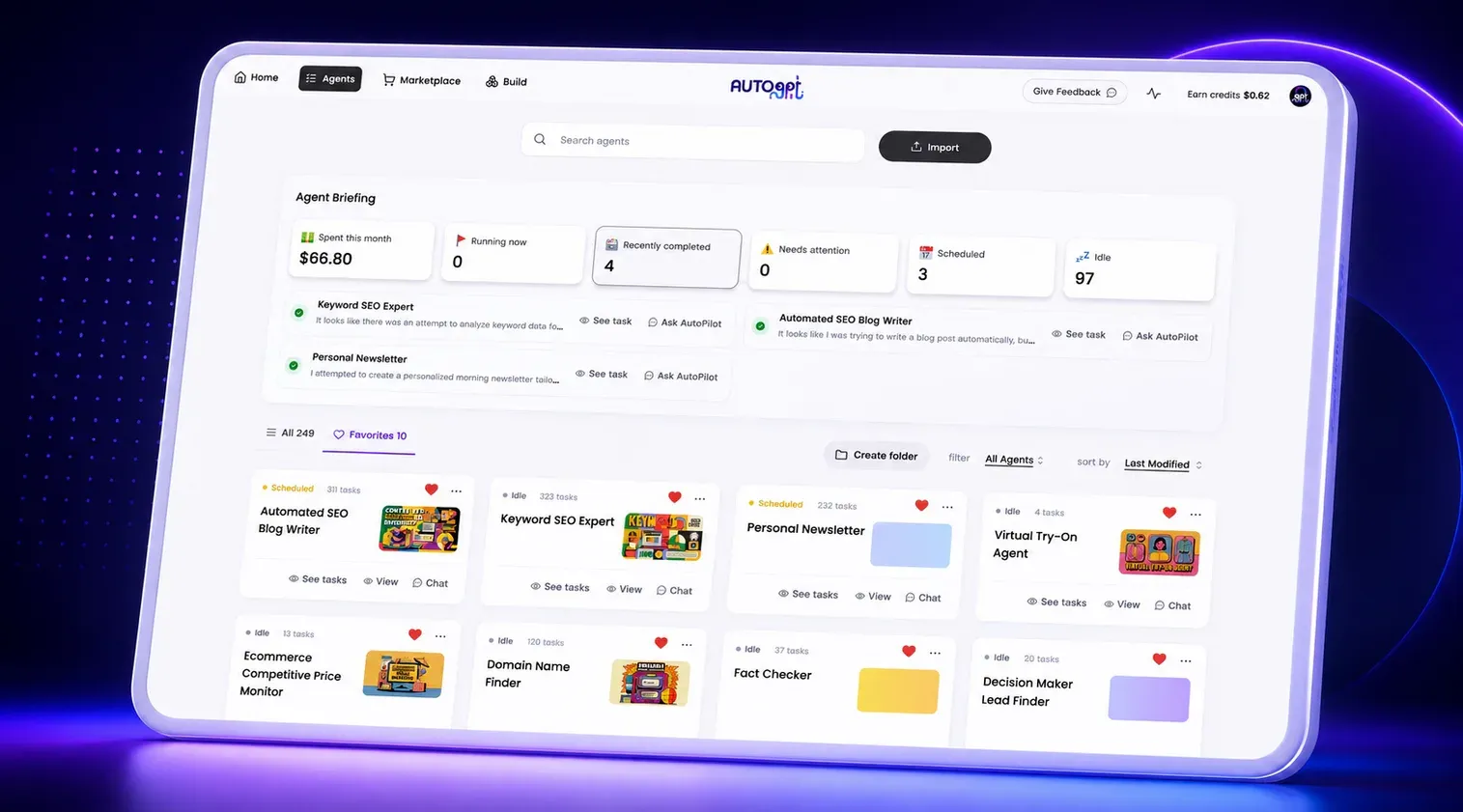
AutoGPT is a platform for building and running AI agents and scheduled workflows: you subscribe at platform.agpt.co or run the same software in Docker on your own server, paying the model provider either way. The repository at Significant-Gravitas/AutoGPT still holds the 2023 autonomous agent in a folder called classic/, while the product lives in autogpt_platform/. That split decides most of the delivery work. The platform has accounts, a billing wallet, a database, migrations and a backup path. The 2023 agent has none of those, and its docs say it is no longer supported from a security perspective.
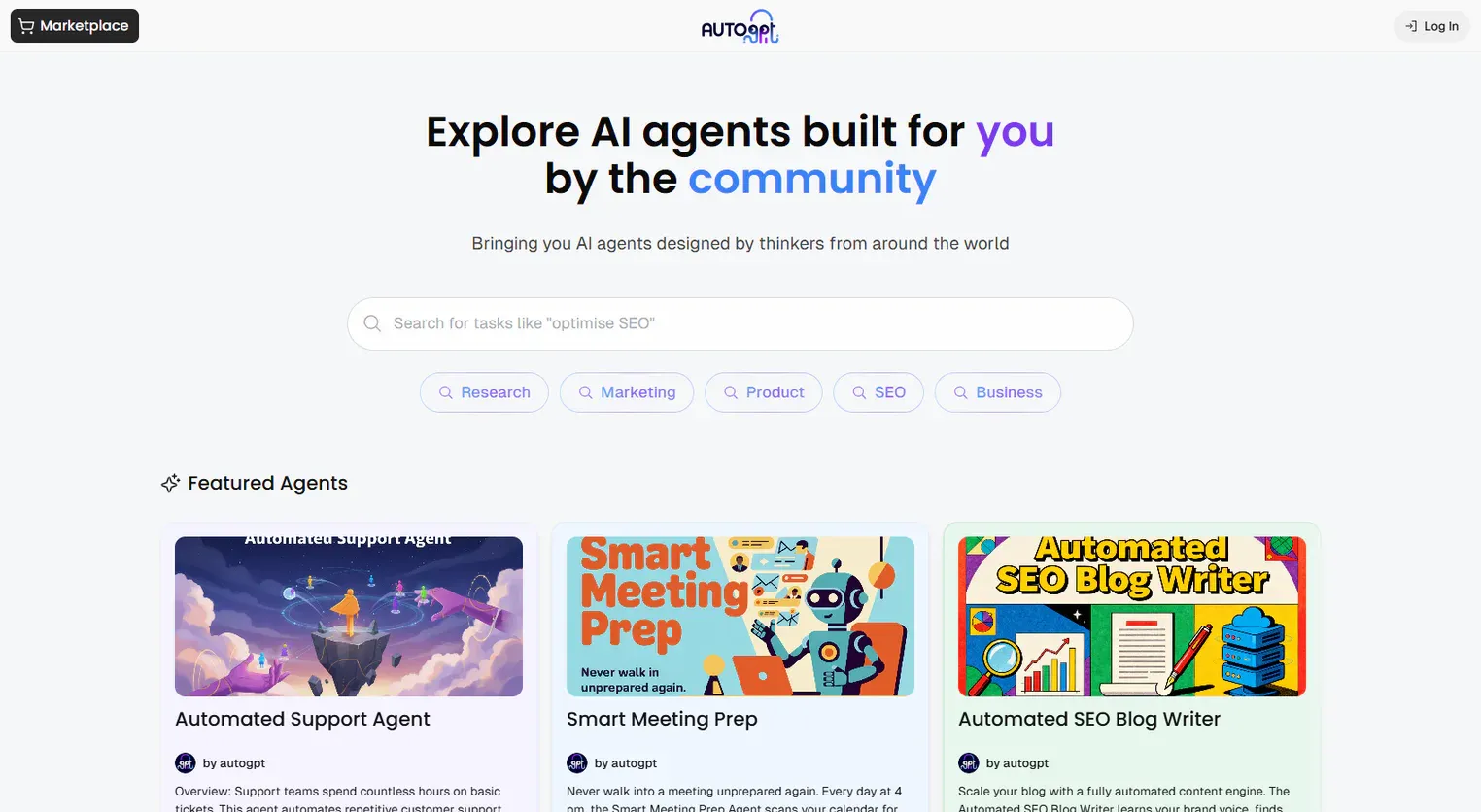
The product is a workflow builder with an assistant on top, not a chatbot: you draw an agent as blocks in a visual editor, connect it to Gmail, Notion, GitHub or an LLM block, and run it on a schedule. The assistant, called Otto in the README, hands work to named specialists for content and sales. If your client's problem is "this report is assembled by hand every Monday", that is the shape of work AutoGPT targets.
The repository and what the numbers say
According to the GitHub API on 18 November 2026, the repository has 188,085 stars and 45,861 forks, was created on 16 March 2023 and was last pushed on 18 November 2026. The last-push date is what changes the decision. Here the project shipped a release three days before that reading: the notes for autogpt-platform-beta-v0.11.3, published on 15 November 2026, list dozens of merged fixes plus fixes for privately reported security issues.
The same API record gives Python as the language, master as the default branch, and NOASSERTION as the license field, meaning GitHub did not recognise a standard SPDX license. That is not sloppy paperwork: the LICENSE file states the split, with Polyform Shield License 1.0.0 over autogpt_platform/ and MIT over everything else, under a 2023 copyright line for Toran Bruce Richards. Open issue volume on the same date is 317 when pull requests are excluded, or 703 open items when they are counted in.
The name costs you the first meeting
The 2023 project is why people search for AutoGPT, and it is why a client arrives expecting a prompt loop that burns money and invents facts. The project's own Classic documentation carries a maintenance notice reading "not supported from a security perspective", with no dependency updates and no issue fixes. Copying that old README into a client's infrastructure leaves an unmaintained codebase holding their credentials.
The first hour of any AutoGPT conversation is correction work, and that work is billable or it is a loss. You explain that the product is a workflow runner with review steps, not an autonomous researcher, and that a person reads the output before it goes anywhere. Then you price what the 2023 pitch never mentioned: keeping it running, rotating keys, a failed run at 2am, and what happens when the maintainer moves on.
What the platform does, in its own words
The README sells the product as "Your team of AI Experts" and names four of them, with Otto coordinating, Maria on SEO content and Max as an account executive. The docs are plainer about the objects underneath: an agent is an automated workflow you design, a block is one action such as generating text or sending an email, a task is one execution, and credits meter block execution. Marketplace agents are community-built and pass a review by the AutoGPT team.
Two features decide the studio fit. Scheduling and triggers put the Monday report and the weekly competitor digest on a timer or a webhook. The visual builder lets a client read the block graph and see what runs, a better handover artefact than a prompt in a text file. The README also advertises a REST API and an MCP server, so agents can run from your own code.
Installing it on a machine you control
The shortest documented path is one Docker image, significantgravitas/autogpt on Docker Hub, carrying the frontend, the backend, PostgreSQL, a three-node Valkey cluster, RabbitMQ, nginx and FalkorDB. The run command in the README binds it to loopback on port 3000, sets --shm-size 2g and log rotation, and mounts a named volume at /data. You create an account in the browser and promote it with docker exec autogpt autogpt-admin promote you@example.com. Installers for Linux, macOS and Windows do the same job in one command.
The requirements are measurements, not a floor: startup and steady state used 5 to 6 GiB of memory in the project's test installations, with headroom on top. No model credentials are needed to boot. You can create an account and build, while provider-backed blocks report a missing credential until a route exists. The documented routes are an OpenRouter plus OpenAI embeddings default, an Anthropic option, and Ollama or another OpenAI-compatible server with a 4B chat model and nomic-embed-text. Passwords need 12 characters or more, and only port 3000 should be exposed.
What the license actually lets you do
Polyform Shield 1.0.0 grants copyright, distribution, change and patent licenses for any purpose except providing a product that competes with the software or with any product the licensor builds on it. The clause is broad and states that goods and services compete even when they are free or built on a different stack. The README's summary for non-lawyers is free for personal and internal business use, and not for sale as a competing hosted service.
For studio work, an internal tool and a client's internal deployment sit inside that permission; reselling AutoGPT as a hosted service to several clients is the case the clause targets. Two details matter. The image bundles third-party services under their own licenses, FalkorDB under SSPL-1.0 among them, with license files at /usr/share/licenses/. The image also defaults to BEHAVE_AS=local, documented as fit for single-tenant use; a multi-tenant deployment must set cloud, and the bundled frontend does not support that path. Not verified for this article: any legal reading of one client arrangement.
Whether a client can take it over
Handover is partial, and that gap should shape your paperwork from day one. The documented export path is an agent file: from the Agent Library you choose Export Agent to File, you get a .json, and another account imports it. That moves the graph and nothing else. The self-hosting docs state that no supported conversion exists from the single-container appliance to the multi-container or hosted setup, and that accounts, run history, schedules, credentials and memory are not migrated.
Credentials are the sharper edge: the compose stack keeps an ENCRYPTION_KEY in backend/.env, encrypts stored integration credentials with it, and that file belongs in the backup next to the database. In the appliance, generated secrets land in /data/config/runtime.env with mode 0600, and with no supported in-place rotation a leaked volume means a rebuild and reconnecting every provider. Upgrades work if you pin a tag, since vX.Y.Z maps to a GitHub release. The order is backup, remove the stopped container, start the new image on the same volume. Rollback restores the pre-upgrade archive into a new volume, and an older image cannot run against a volume a newer one migrated.
How AutoGPT compares with OpenClaw and OpenHands
| AutoGPT | OpenClaw | OpenHands | |
|---|---|---|---|
| What it is, per its own README | A platform for agents and scheduled workflows, hosted or self-hosted, with a visual builder and a credit-metered cloud | An open-source AI assistant that runs on your own devices and meets you in the chat channels you already use | A self-hosted developer control center for coding agents and automations |
| License and what it restricts | Polyform Shield 1.0.0 for autogpt_platform/, which forbids products that compete with the vendor; MIT elsewhere; GitHub tags the repo NOASSERTION | MIT, no restriction stated in the README | MIT according to the GitHub API on 18 November 2026; the LICENSE file was not opened for this article |
| Where it runs | Hosted at platform.agpt.co, or one Docker container, or a Docker Compose stack on your own host | On your own computer and devices, with a local Gateway; the README states there is no paid tier, hosted service or token | Locally by default, in a Docker sandbox, on VMs, or optionally on OpenHands Cloud or Enterprise |
| What it needs to run | Docker, about 5 to 6 GiB measured plus headroom, model keys or a local OpenAI-compatible server | A Node.js runtime, 24.16.0 or later on 24.x according to its README, plus model and channel credentials | Node.js 24 or later and uv for the npm install path, Docker for the sandbox path |
| What the reader maintains afterwards | Image tags and digests, the /data volume, cold backups and restores, migrations, model keys and spend caps, signup policy | The Gateway, channel connections and pairing approvals, sandboxing policy, plugin and skill updates | The Canvas frontend, an Agent Server per backend, the state volume and an API key |
| Support | Discord and GitHub issues; the Max plan lists priority support on the pricing page of 18 November 2026 | Official support at community.openclaw.ai; the OpenClaw Foundation employs the core team | Slack channel and GitHub issues; commercial support terms are Not verified for this article |
| Stars, forks, created, last push (GitHub API, 18 November 2026) | 188,085 stars, 45,861 forks, created 16 March 2023, pushed 18 November 2026 | 394,736 stars, 82,922 forks, created 24 November 2025, pushed 18 November 2026 | 93,747 stars, 12,555 forks, created 13 March 2024, pushed 18 November 2026 |
| Where it fits best | Recurring back-office routines a client can watch and review | One assistant living in chat, on hardware you own, with your own model choice | Repository work, issue triage and CI style automations for a dev team |
Three cells stay open. OpenHands' support and commercial terms were not read, so its row carries README claims only. The OpenClaw license cell rests on the badge in its README plus the GitHub API license tag, not on the license text. AutoGPT's Team plan is marked "coming soon" on the pricing page of 18 November 2026, so seat or admin claims about it are Not verified for this article. Both comparison columns come from the READMEs of openclaw/openclaw and OpenHands/OpenHands, read on 18 November 2026.
What it costs, and where the money goes
The pricing page, read on 18 November 2026, lists Pro at $50.00 a month after a 7 day free trial that needs an eligible new account and a card. Max is $320.00 a month, described as 8.5x Pro usage, 5x file storage, early feature access and priority support. Team is marked "coming soon", and a yearly toggle claims 15 percent off. Prices move, so quote the page rather than this article.
The subscription does not cover execution. The same page says Pro covers Otto and Expert chat while scheduled runs draw on a credit wallet with a cap you set per Expert. Billing docs add that credits are charged when blocks run, that a charge may be fixed or derived from tokens, provider cost, elapsed time or item count, and that reconciliation after a usage-based run can leave the balance below zero. Auto-refill is a setting, so check what a client left switched on. Self-hosted installs pay the provider directly, and the appliance leaves the AutoPilot spend caps disabled by default; the docs ask for a positive CHAT_DAILY_COST_LIMIT_MICRODOLLARS and weekly equivalent. The repository's own dashboard screenshot shows a "Spend this month" tile, and that is the figure a client asks about.
What breaks and what the tracker shows
The docs are blunt about the appliance, and their limitations list reads like a risk register. One container is one failure, maintenance, scaling and security boundary. Concurrency is capped: each backend role gets at most five PostgreSQL connections, the scheduler keeps two pools of three, and FalkorDB takes 25 queued queries with a one second timeout. Valkey and FalkorDB have no memory ceiling of their own, so their working sets grow until the host runs out. A run still executing when the container stops is abandoned, and its row stays RUNNING.
Operational traps follow. An interrupted first-boot migration makes later boots refuse to continue, and recovery depends on whether the migration reached the database. A watchdog allows 600 seconds for initial health, then stops the container for the restart policy. Uploads go unscanned, because the image carries no antivirus daemon, unlike the hosted platform. Required email verification is unsupported, and with no Postmark configured there is no self-service password reset. The mitigations are in the docs: publish port 3000 only behind a TLS proxy, keep the signup allowlist closed, take a checksummed cold backup before every image change, and run one agent end to end plus a restart test after each upgrade.
Two dated items belong in the runbook. Issue 16951, filed on 18 November 2026, reports a scheduler stop that can hang. And the API docs say v1 stops working on 1 February 2027, with 31 January 2027 as its last day of service, since a v1 key cannot be edited; the v1 migration guide has the mapping, read 18 November 2026.
A setup you can hand over in six steps
1. Settle two questions in writing before any code is written: which AutoGPT the project needs, and whether the license covers the arrangement you are proposing. 2. Start the appliance on a VPS with room to spare, bind it to loopback, and set AUTOGPT_PUBLIC_URL to the exact HTTPS origin. The docs call a mismatch the common self-host breakage, since it spoils authentication, callbacks, cookies and generated links. 3. Put your own TLS reverse proxy in front of port 3000, create the owner account under a signup allowlist, promote it, close new accounts, and configure Postmark if anyone will need a password reset. 4. Pick the model route and set daily and weekly spend caps in microdollars. The provider account and the cap number go on the client's infrastructure sheet, not yours. 5. Build the routine, run it once on test inputs, and read the output before you enable a schedule. Anything that sends or publishes stays behind a review step. 6. Write the handover note the day the install works: image tag and digest, volume name, environment file path, backup location and checksum, restore command, administrator address, provider account. Test one restore into a new volume before the invoice goes out.
For a client who wants their own PostgreSQL tuning, the platform developer README, read on 18 November 2026, covers the multi-container path where make init-env generates the secrets.
Who should not use it
Studios reselling agent access to their clients' customers should look elsewhere. The Polyform Shield noncompete covers that case, and the self-hosted image is documented as single-tenant with a frontend compiled in local mode. Teams with no Docker operations and nobody on call should hesitate too, since the appliance is one failure domain, a watchdog stops it on persistent health failure, and runs in flight are lost on a stop.
Projects that need strict data separation between clients on one installation have no supported answer here: team workspaces appear in the docs but are enabled per account or deployment, and the cost of a multi-client tenancy model is Not verified for this article. For repo work, OpenHands is built for issue triage and pull requests, and it is MIT licensed. Nobody should start a new client project on AutoGPT Classic, whose docs say the security posture is unsupported and issues will not be fixed.
Questions you will be asked before signing
Is AutoGPT still the autonomous agent that ran on a GPT-4 prompt loop? No, that product is AutoGPT Classic, kept in the classic/ folder under MIT. Its documentation carries a maintenance notice saying it is not supported from a security perspective, with no dependency updates and no issue fixes.
Can I run it for a client without paying the AutoGPT company? Yes, by self-hosting the Docker image, where you pay for the server and the model provider. The platform code is Polyform Shield licensed, summarized in the README as free for personal and internal business use but not for a competing hosted service, so read the license file before you package it as a product.
What does the hosted plan cost? The pricing page read on 18 November 2026 lists Pro at $50.00 per month with a 7 day free trial and Max at $320.00 per month, with Team marked as coming soon. Metered block execution runs from a credit wallet on top of the subscription, and that page changes, so check it before quoting.
Can a client take a self-hosted installation over from me? Partly. Agents export and import as .json files through the Agent Library, and backups restore into a new volume. Accounts, run history, schedules, credentials and memory do not migrate between deployments, and stored credentials are encrypted with a key in the environment files.
Do I need a GPU or a local model? No. The container boots with no model credentials at all. The docs' default route uses OpenRouter for chat and OpenAI for embeddings, and an Ollama route with a small quantized model is documented for anyone who wants no API keys.
Comments